
Anna Mackey
MGM Graduate Student
anna.mackey@duke.edu
Favorite Animal:


How did your career path lead you to Duke?
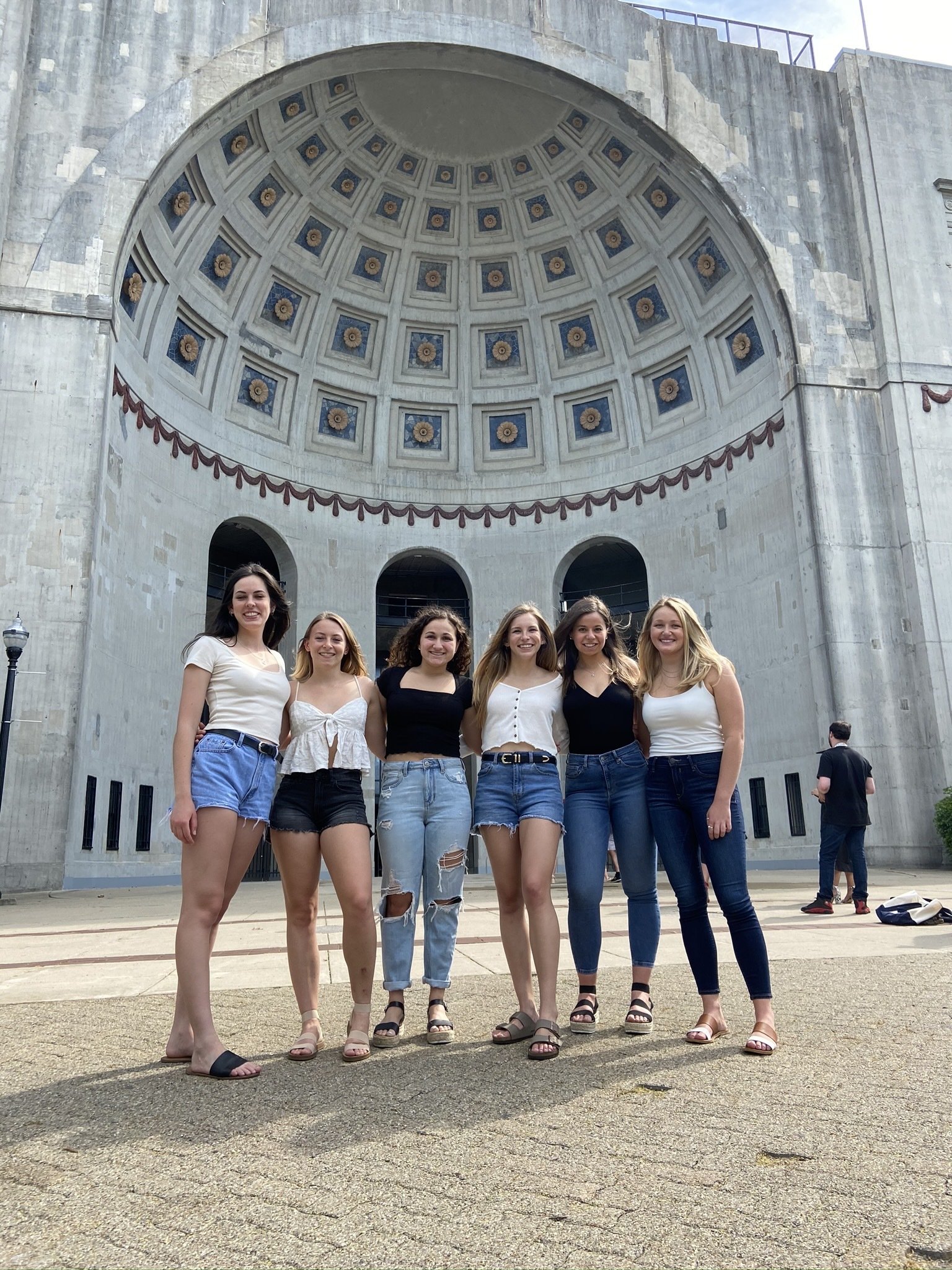
I am originally from Columbus Ohio and got my B.S. in Mathematical Biology from Ohio State University. I became interested in research when I participated in SEA-PHAGES, a program that engages undergraduates in a semester-long research project where students isolate and characterize bacteriophage from an environmental sample. I loved working with phages, so I joined Dr. Matthew Sullivan’s Lab where I studied infection dynamics in multiple phage-host communities. A highlight from my time in the Sullivan Lab was participating in a fieldwork expedition where myself and two other lab members traveled to Bermuda and collected seawater samples aboard the Atlantic Explorer. I also continued involvement with the SEA-PHAGES program by serving as a TA for the lab. After receiving my bachelors, I spent two years working as a research assistant in Dr. Matthew Anderson’s lab at OSU. I studied the transcriptional and phenotypic consequences of aneuploidy in Candida albicans which began my interests in fungi and computational biology!


What do you like to do outside of lab? Hobbies? Interests?
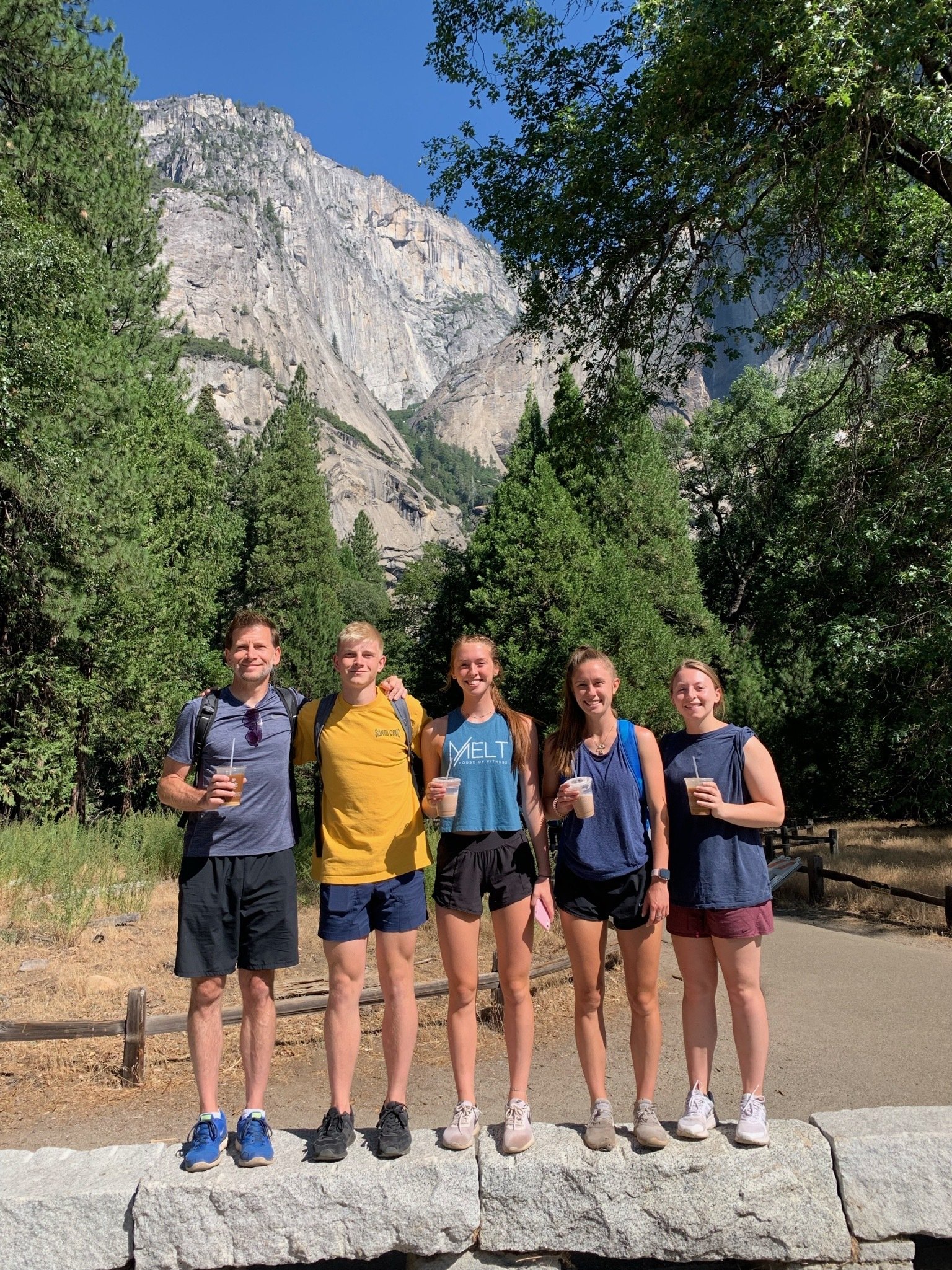
In my free time I like to try new recipes, see live music, work out at Burn Boot Camp, play frisbee golf with my partner, and spend time outside. Joining Burn Boot Camp has been a fun and challenging experience that helped me build a sense of community outside of Duke. I also enjoy going to Thursday trivia with my cohort at Bull City Ciderworks.


Publications
Mackey AI, Fraunfelter V, Shaltz S, McCormick J, Schroeder C, Perfect JR, Feschotte C, Magwene PM, Gusa A. Temperature and genetic background drive mobilization of diverse transposable elements in a global human fungal pathogen. PLoS Genet. 2026 Jan 16;22(1):e1011979. https://doi.org/10.1371/journal.pgen.1011979
Anna I. Mackey, Vesper Fraunfelter, Samantha Shaltz, John McCormick, Callan Schroeder, John R. Perfect, Cedric Feschotte, Paul M. Magwene, Asiya Gusa. Temperature and genetic background drive mobilization of diverse transposable elements in a critical human fungal pathogen. bioRxiv 2025.05.19.654958. https://doi.org/10.1101/2025.05.19.654958
Fillinger, R.J., Mishra, A., Loza, L., Sircaik, S., Carriel, C.C., Mackey, A.I., Stratton, T.D., Filler, S.G., Selmecki, A.M., Bennett, R.J., Anderson, M.Z. (2026). Parasex generates highly recombinant progeny in Candida albicans with increased virulence. Nature Microbiology. https://doi.org/10.1038/s41564-025-02247-6
Dey, R., Coenen, A.R., Solonenko, N.E., Burris, M.N., Mackey, A.I., Galasso, J., Sun, C.L., Demory, D., Muratore, D., Beckett, S.J., Sullivan, M.B., Weitz, J.S. (2026). Emergent higher-order interactions enable coexistence in phage-bacteria community dynamics. Accepted, ISME Journal.
Mackey, A.I., Fillinger, R.J., Martinez, D.A., Wang, J.M., Tsai, H., Cuomo, C.A., Bennett, R.J., Anderson, M.Z. (2025). Aneuploidy confers a unique transcriptional and phenotypic profile to Candida albicans. Nature Communications. https://doi.org/10.1038/s41467-025-58457-3
Carrillo, A., Hageman, E., Chittick, L., Mackey, A.I., Ndlovu, K.S., Tian, F., Gilbert, N.E., Muratore, D., Vik, D., LeCleir, G.R., Sun, C., Jang, H.B, Pavan, R.P., Weitz J.S., Wilhelm, S.W., Sullivan, M.B. (2025). Sub-daily Bermuda Atlantic Time Series virus sampling reveals taxonomy, host, and functional differences at the population, but not community level. BioRxiv. https://doi.org/10.1101/2025.10.20.683370